
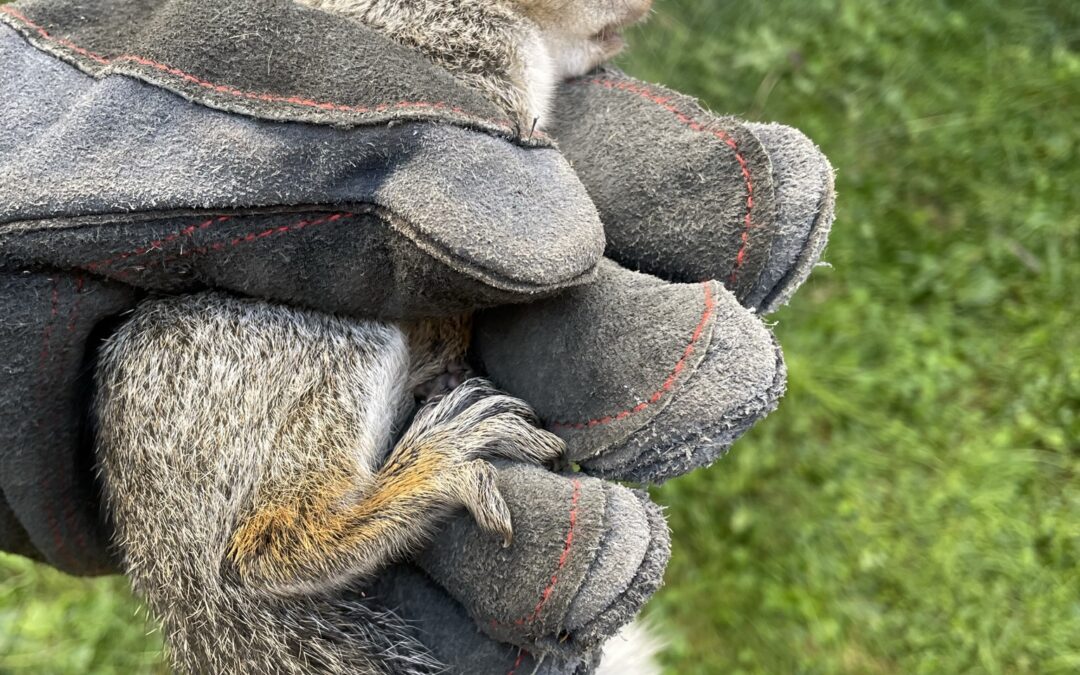
If you’re hearing a lot of scurrying and squeaking in your attic after dark — especially if you’ve already tried mouse traps or assumed it was “just squirrels” and the noise never stopped — there’s a good chance the culprit is one of Central PA’s most overlooked attic invaders: the southern flying squirrel. They’re nocturnal, they’re social, and they’re one of the most commonly misdiagnosed wildlife problems homeowners deal with in the fall.
Why Flying Squirrels Get Mistaken for Mice (or Ignored Entirely)
Southern flying squirrels are small — only about 8 to 10 inches including their tail — and far lighter on their feet than the gray squirrels most homeowners are used to seeing in yards during the day. Because they’re active exclusively at night and their footsteps and chattering sound a lot like rodents scurrying through insulation, many homeowners assume they have a mouse problem, set traps, and move on when the noise doesn’t stop.
The giveaway is timing: if you’re hearing consistent activity specifically after dark — running, light thumping, or chattering — rather than during the day, flying squirrels are a strong possibility, especially here in Central PA where they’re far more common in attics than most people realize.
Why Fall Is Peak Season for Flying Squirrel Activity
Like gray squirrels, southern flying squirrels don’t hibernate — they stay active through winter and rely on a warm, sheltered space to get through cold months. What makes them different is that they’re highly social: while a gray squirrel problem might mean one or two animals, a flying squirrel colony can number a dozen or more individuals denning together in a single attic space for warmth. Fall is when they actively seek out that space, which is exactly why activity tends to spike this time of year.
Signs You Have Flying Squirrels, Not Mice or Regular Squirrels
- Scurrying, light thumping, or chattering noises specifically after dark, often most active around dusk and again before dawn
- Sounds that seem to move across a wide area of the attic (a sign of multiple animals, not one)
- Gnaw marks on wood, wiring, or insulation, similar to other rodent damage but often more extensive given colony size
- Mouse traps that keep getting triggered or disturbed without success
- Small entry gaps around the roofline, soffits, or gable vents — flying squirrels can squeeze through openings as small as an inch and a half
If you’re noticing several of these, especially the nighttime timing, it’s worth having the attic properly inspected rather than continuing to treat it as a mouse problem.
Why a Flying Squirrel Colony Is a Bigger Job Than It Looks
Because flying squirrels live in groups, an infestation is rarely just one animal — and every animal left behind means the noise, the damage, and the entry points remain. Left unaddressed, a colony can cause meaningful damage to insulation and wiring over a winter, and like most attic-dwelling wildlife, they’ll return to the same space year after year if the entry points aren’t properly sealed.
This is why store-bought mouse traps and generic pest sprays consistently fail against flying squirrels — they’re targeting the wrong species, and even when a trap does catch one animal, the rest of the colony and the entry points remain. A proper wildlife exclusion approach — locating every entry point and sealing the attic once it’s confirmed vacant — is the only fix that actually holds.
Hearing activity in your attic after dark? Contact ZWS Wildlife Solutions for an inspection — we’ll confirm what’s actually up there before you spend another night listening to it.
How We Handle Flying Squirrel Removal
Our approach to flying squirrels follows the same exclusion-first process we use across our wildlife removal services:
- Inspection — identifying the species (flying squirrel vs. gray squirrel vs. mice matters, since the approach differs), and active entry points or potential future entry points.
- Humane removal — safely and humanely removing the colony
- Exclusion — sealing all entry points once the attic is confirmed empty, so the space can’t be reclaimed
- Prevention guidance —noting any roofline, soffit, or vent gaps likely to invite the same problem again next fall
If squirrels of any kind — flying or otherwise — have been a recurring issue at your property, our squirrel removal page covers the broader picture of what we handle.
Don't Let Another Winter Go By With Company in the Attic
A flying squirrel colony that settles in for winter may need to wait until spring to address it safely if not acted on before snow and ice set in, act now, while activity is just starting to ramp up.
Think you might have flying squirrels instead of mice? Schedule an inspection with ZWS Wildlife Solutions — trusted by Cezntral PA homeowners since 2006.
Frequently Asked Questions (FAQ)
Q: Are southern flying squirrels dangerous?
A: They’re not aggressive toward people, but like most wildlife they can carry parasites and their droppings can pose health risks, and a colony can cause real damage to insulation and wiring over time.
Q: How do I know it’s flying squirrels and not regular gray squirrels?
A: Timing is the biggest clue — flying squirrels are active almost exclusively at night, while gray squirrels are daytime animals. Nighttime attic noise is a strong indicator you’re dealing with flying squirrels.
Q: Can I just use mouse traps if I think it’s flying squirrels?
A: Mouse traps are sized and baited for mice, not squirrels, and won’t address a colony or the entry points they’re using to get in. A proper inspection is the only reliable way to confirm what you’re dealing with and resolve it fully.