
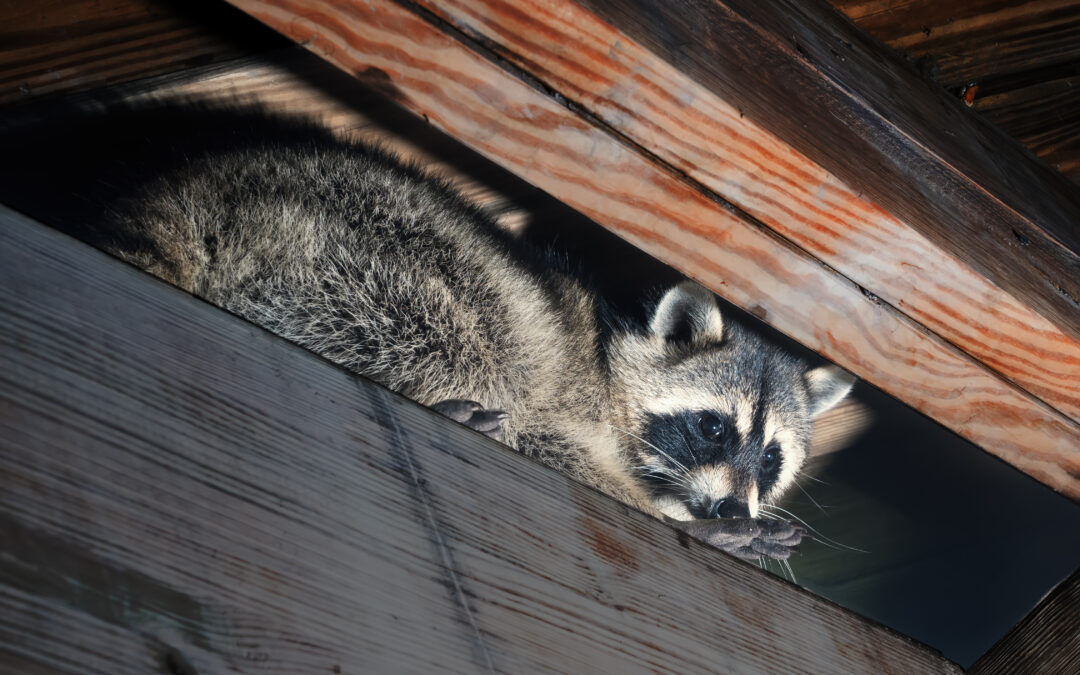
It is 2:00 AM, and you are suddenly jolted awake. It isn’t the light, frantic scurrying of a mouse or the rapid scratching of squirrels. Instead, it sounds like there is a person walking around directly above your bedroom ceiling. You hear heavy thumping, localized scratching, and perhaps even strange vocalizations that sound like chattering or crying.
If this sounds familiar, you are likely dealing with one of the most destructive nuisance animals in Pennsylvania. Dealing with raccoons in attic central PA homes is a massive stressor for property owners, but ignoring the problem will only lead to structural damage and health hazards.
At Zimmerman Wildlife Solutions, we have spent nearly 20 years helping homeowners across Danville, Lewisburg, Elysburg, and Selinsgrove take their homes back from invasive wildlife. In this comprehensive guide, we will break down why raccoons choose your attic, the hidden dangers they bring, and exactly how to get them out for good.
Experiencing a wildlife emergency right now? Don’t wait for the damage to get worse. If you suspect raccoons are tearing apart your roof or insulation, Contact Us immediately or call us at (570) 437-2144 for a professional inspection and rapid removal plan.
Why Do Raccoons Invade Attics in Central Pennsylvania?
To understand how to get rid of raccoons, you first have to understand why they are breaking into your house in the first place. Raccoons are incredibly intelligent, highly adaptable, and incredibly strong. While their natural habitat is in wooded areas, hollow trees, and brush, residential neighborhoods offer something even better: five-star luxury accommodations.
Your attic provides a raccoon with three things they desperately need:
- Consistent Warmth: Central Pennsylvania winters are notoriously freezing, and early spring can bring unpredictable storms. Your attic is insulated, dry, and traps heat, making it the perfect winter den.
- Protection from Predators: Up in your attic, raccoons are completely safe from coyotes, foxes, owls, and neighborhood dogs.
- The Perfect Nursery: The most common reason a raccoon breaks into an attic between March and June is to give birth. Female raccoons (sows) seek out the safest, most secluded places possible to raise their kits (babies).
Raccoons are incredibly dexterous and surprisingly strong. They don’t need a massive hole to get inside; if they find a weakened roof vent, a rotted fascia board, or a loose soffit, they will use their hand-like front paws to rip the opening wider and force their way inside.
5 Tell-Tale Signs You Have Raccoons in Your Attic
Not sure what kind of animal is living above you? While a professional wildlife inspection is the only way to know for sure, here are five glaring signs that a raccoon has moved in:
1. Heavy Thumping and Walking Noises
Because adult raccoons can weigh anywhere from 10 to 30 pounds, they do not tip-toe. The most common homeowner complaint is the sound of “heavy boots” walking across the drywall above their heads. Because raccoons are nocturnal, these sounds are most prominent just after sunset (when they leave to forage) and just before sunrise (when they return to sleep).
2. Strange Vocalizations
If you have a mother raccoon raising kits in your attic, you will likely hear them. Baby raccoons make a very distinct, high-pitched crying or chittering sound that is often mistaken for baby birds. Adult raccoons may also growl, hiss, purr, or chatter.
3. Severe Exterior Damage
Raccoons are not subtle when they break in. Take a walk around the perimeter of your home and look up at the roofline. You may see:
- Torn or hanging soffits.
- Smashed or bent gable vents and roof louvers.
- Ripped shingles or chewed holes through the wooden roof decking.
- Muddy paw prints on your downspouts or siding (a clear indicator of how they are climbing up).
4. Insulation Damage
Once inside, raccoons will completely trample your fiberglass or cellulose insulation. They will crush it down to clear pathways and rip up pieces of it to construct a large, bowl-shaped nest for their babies. This severely compromises your home’s energy efficiency, leading to skyrocketing heating and cooling bills.
5. Raccoon Latrines (Foul Odors)
Raccoons are unique in that they choose a specific, localized area to use as a bathroom, known as a “latrine.” Over time, the accumulation of raccoon feces and urine will begin to seep through your attic floorboards, creating large, brown, foul-smelling stains on your ceiling drywall.
The Hidden Dangers: Why Raccoons Are a Serious Liability
Having raccoons in the attic is not just a nuisance; it is an active threat to your property value and your family’s safety.
Extreme Fire Hazards
Like bats and squirrels, raccoons are curious and destructive. They will frequently chew on structural wood, PVC plumbing pipes, and HVAC ductwork. Most dangerously, they will gnaw on the rubber insulation surrounding your electrical wires. Exposed, live wires surrounded by dry, highly flammable attic insulation is a recipe for a devastating house fire.
Severe Health and Biological Risks
Raccoon latrines are essentially biohazards. Raccoon feces frequently contain the spores of Baylisascaris procyonis, commonly known as raccoon roundworm. If these microscopic spores become airborne and are accidentally inhaled or ingested by humans or pets, they can cause severe neurological damage and even blindness.
Furthermore, wild raccoons are notorious carriers of ectoparasites, including fleas, ticks, and mites. Once the raccoon brings these parasites into the attic, they can quickly migrate down through your walls and infest your living space.
Why DIY Raccoon Removal is a Dangerous Mistake
When homeowners hear noises in the attic, their first instinct is often to run to a local hardware store, buy a cage trap, and try to handle it themselves. When dealing with raccoons in attic central PA properties, DIY trapping is almost always a costly mistake.
Here is why you should never attempt to remove a raccoon on your own:
- The Maternity Season Trap: If you set a trap on your roof and successfully catch a raccoon in April or May, there is a 90% chance you just trapped a nursing mother. If you relocate her, you are leaving 3 to 5 helpless, blind babies hidden deep within your attic walls or insulation. Those babies will starve to death, resulting in an unbearable dead-animal odor that will permeate your house for months, requiring walls to be cut open to extract the carcasses.
- Aggression: A mother raccoon protecting her young is highly aggressive and dangerous. If cornered in a dark, cramped attic, she will attack.
- Trap-Shy Animals: Raccoons are incredibly smart. If a homeowner sets a trap incorrectly, the raccoon may steal the bait without triggering the door, or trigger it and escape. Once a raccoon outsmarts a trap, they become “trap-shy” and are exponentially harder for professionals to catch later.
The Zimmerman Wildlife Solutions Approach: Trapping & Permanent Exclusion
To solve a raccoon problem permanently, you need more than just a trap—you need a comprehensive strategy. Here is how our licensed experts at Zimmerman Wildlife Solutions handle the job:
Step 1: Comprehensive Property Inspection
We start by thoroughly inspecting your roofline, vents, and attic space. We identify the exact entry points, assess the extent of the damage, and determine if there is a litter of kits hidden in the insulation.
Step 2: Humane Trapping and Removal
Using professional-grade equipment and baits, we safely and humanely trap the adult raccoons. If babies are present, our technicians carefully extract them by hand so they can be reunited with their mother or handed over to a licensed wildlife rehabilitator.
Step 3: Professional Repair and Exclusion
This is the most critical step. If you remove the raccoon but leave the hole open, another animal will move in within weeks. We specialize in Repair and Exclusion, meaning we don’t just patch the hole with flimsy chicken wire. We use custom-bent flashing, reinforced steel mesh, and professional-grade sealants to completely animal-proof your home. Our repairs are built to withstand the elements and the brute strength of future wildlife.
Step 4: Cleanup Assessment
After the animals and their entry points are handled, we evaluate the biological damage left behind and recommend localized cleanup solutions to remove soiled insulation, feces, and dangerous parasites, restoring your attic to a safe state.
How to Prevent Raccoons from Targeting Your Home
While our exclusion services are guaranteed to secure vulnerable entry points, homeowners can take proactive steps around their property to make their yard less attractive to raccoons:
- Secure Your Trash: Raccoons are notorious scavengers. Keep your garbage cans inside the garage until collection morning, or invest in heavy-duty cans with locking lids.
- Trim Tree Branches: Raccoons are excellent climbers. Keep tree limbs trimmed at least 8 to 10 feet away from your roofline to remove their easy access “bridge” to your shingles.
- Remove Outdoor Food Sources: Do not leave pet food out overnight, and clean up any fallen birdseed from underneath your bird feeders, as this acts as an all-you-can-eat buffet for local wildlife.
- Cap Your Chimney: A heavy-duty, professionally installed chimney cap is one of the easiest ways to prevent raccoons (and birds) from climbing down your flue to nest.
Don’t Let Raccoons Destroy Your Home—Call the Local Experts
Dealing with wildlife intrusions is overwhelming, but you do not have to handle it alone. If you are hearing heavy footsteps at night, seeing torn soffits, or suspect you have a family of raccoons in your attic in Central PA, immediate action is the key to minimizing costly damage.
Zimmerman Wildlife Solutions is a family-owned, fully licensed, and highly experienced wildlife management company dedicated to keeping your home safe and animal-free. We don’t just treat the symptoms; we solve the problem at the source.
Ready to evict your unwanted guests for good? Reach out to us today to schedule your comprehensive wildlife inspection.
📞 Call us now: (570) 437-2144 🌐 Or request service online: Visit our Contact Page